

An in-depth look at the creative journey of jewellery designer Srishti Gupta in conversation with Shimul Mehta Vyas, Founder of TANGIBLY INTANGIBLE
In an era where technology often strips design of its “human” pulse, Srishti Gupta is finding the soul within the machine. The Digital Hand: foundree, is a dialogue that explores how 3D-printed structures are transformed from cold, mathematical outputs into poetic, wearable narratives through the intervention of hand-craft.
Through the lens of TANGIBLY INTANGIBLE, Shimul Mehta Vyas probes the delicate balance between the digital and the artisanal, uncovering how Srishti’s work redefines what we consider “precious” in a post-industrial world. It is a conversation about more than just jewellery; it is a meditation on the future of the maker’s mark.
Unplanned Pivot: The Call of the Tactile
The foundation of Srishti’s career began in the digital realm, which she eventually
found insufficient.
A search for the tactile led to a fundamental shift in design discipline, cemented by an international exchange focused on hands-on metalwork.
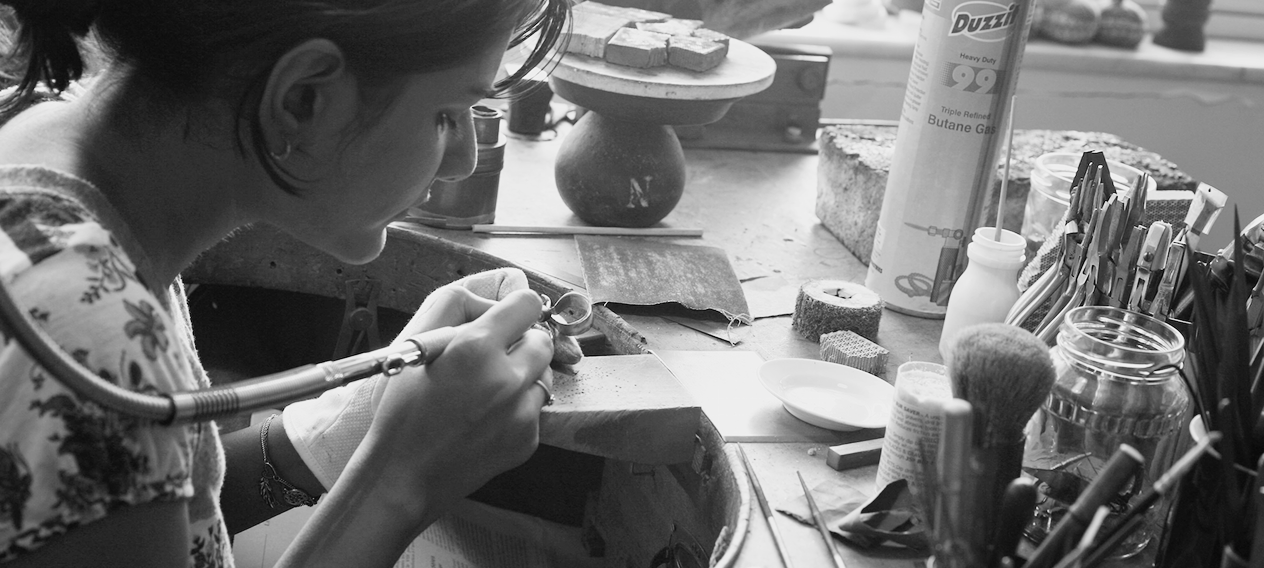
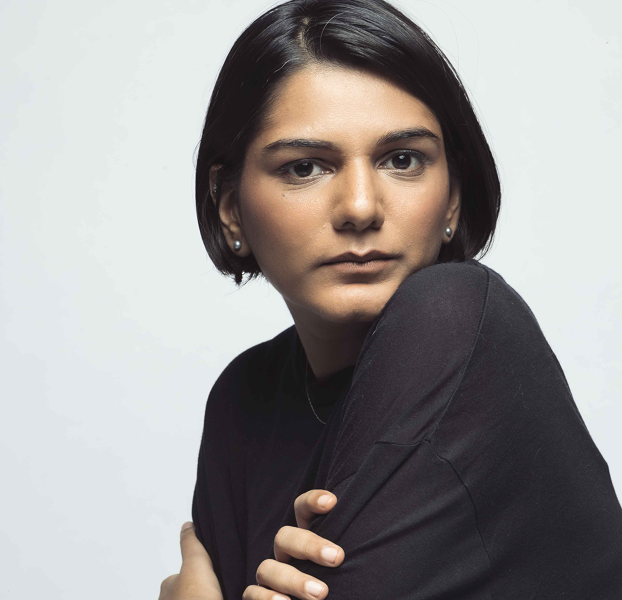
Srishti initially pursued Graphic Design for her undergraduate studies. After a few years in professional practice, a crucial realization set in: the medium was too digital, too limiting. She felt a deep, instinctive need to create tangible objects with her hands.
This need spurred her to pursue a Master’s degree in Lifestyle Accessory Design at the National Institute of Design (NID), India. This phase was transformative, focusing on material science and the physical act of making. The most crucial factor, however, was an exchange semester in the Jewellery Department at the College of Fine Arts (COFA) in Sydney, Australia.
This four-month immersion in metal smithing served as the unexpected catalyst toward jewellery. Working with raw silver and labouring over pieces for days, the satisfaction of holding the finished object provided a sensory fulfillment that digital work could not replicate. “That was one of the reasons that pushed me towards jewellery,” Srishti recalls. “The satisfaction of making it, and it is a small little thing that you can hold in your hand.”
Materials and Meaning
A designer’s environment often sows the first seeds of creativity. For Srishti, the vibrant, material chaos of her hometown, Mumbai, was an early influence.
Early exposure to Mumbai’s expansive material markets, combined with a crucial understanding of contemporary jewellery’s purpose (communication over beautification) learned abroad, defined her design outlook.
Srishti’s childhood was steeped in the culture of making, thanks to her mother, who was always engrossed in a creative project. This required frequent trips to Mumbai’s colossal Kalbadevi market. Roaming the specialized streets—one dedicated solely to beads, another to metal findings—trained her eye to see material connections and possibilities. Even humble industrial components like pipes, viewed in different thicknesses, would trigger design ideas. This early immersion in material availability and variety planted a deep appreciation for non-conventional components.
The Sydney exchange provided the necessary intellectual framework. Srishti observed that the traditional Indian view of jewellery was largely functional—gold, silver, precious, worn for specific occasions. In Sydney, the focus shifted: “It was more about the story, why are you making this? It was not about beautification. It was not about accessorizing. It was about what you are communicating with jewellery.” This exposure to jewellery as a medium of communication was a formative moment.
Beyond Extravagance: The Power of Personal Resonance
This philosophical shift is central to how Srishti defines jewellery, moving far beyond its monetary worth.
Jewellery’s value is fundamentally non-material; its highest purpose is to serve as a comfortable, effortless, and precious keepsake that acts as an extension of the wearer’s personality.
For Srishti, the meaning of jewellery has evolved into three non-negotiable essentials. First, it must have Keepsake Value, making it precious not due to material cost, but because of the personal story it holds, serving as a wearable reminder of a time, place, or gift.
Second, Comfort and Effortlessness are paramount. Since jewellery is worn close to the body, Srishti insists it must be “effortless in terms of wearing it or handling it.” An uncomfortable piece, regardless of its visual appeal, fails its purpose.
Finally, it must be an Extension of Self, acting as an act of self-expression or symbolism that speaks to the wearer’s personality. When asked to weigh material versus non-material value, Srishti is decisive: the non-material aspects must be prioritized. “The non-material value is higher. It needs to first tick those boxes.” The physical form and material choice follow this primary purpose.
Tech for Autonomy, Sustainability, and the Additive Advantage
The convergence of Srishti’s training and her desire for self-sufficiency led her to a highly unconventional production choice for the Indian market: 3D printing.
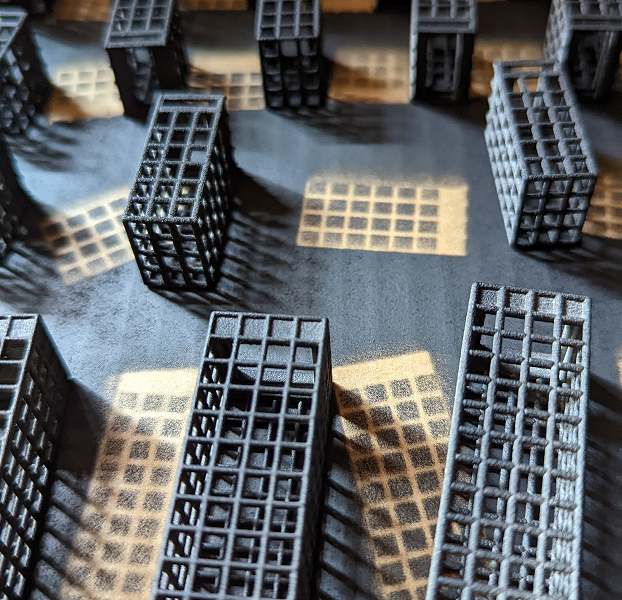
Srishti chose 3D printing (additive manufacturing) over traditional craft-based processes to gain complete creative control, ensure logistical organization, and promote sustainability through reduced waste and on-demand production.
The decision to focus on the small scale of jewellery was motivated by a desire for control. Her initial manufacturing efforts revealed the logistical challenges of craft-based production: erratic timelines, high minimum quantity orders, and unpredictable labour dependency.
3D printing offered a solution to the chaos. Srishti’s initial fascination with the material, which she later reverse-tracked to additive manufacturing, solved her major hurdles. “With 3D printing, I could make prototypes,” she notes. There is no additional cost for a single prototype, no minimum quantities, and high flexibility. Furthermore, it is an inherently sustainable process, as it is additive—using only the material required to build the piece, resulting in less wastage and eliminating dead inventory.
The Human Touch in a Tech-Driven Process
Foundree’s distinctiveness lies not just in the technology, but in how Srishti refuses to let the process dictate the final aesthetic, focusing instead on bringing a human quality to the cold look of 3D printing.
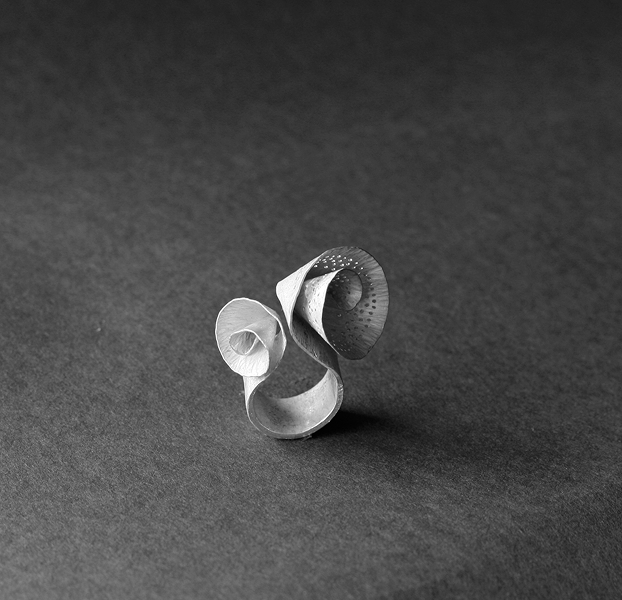
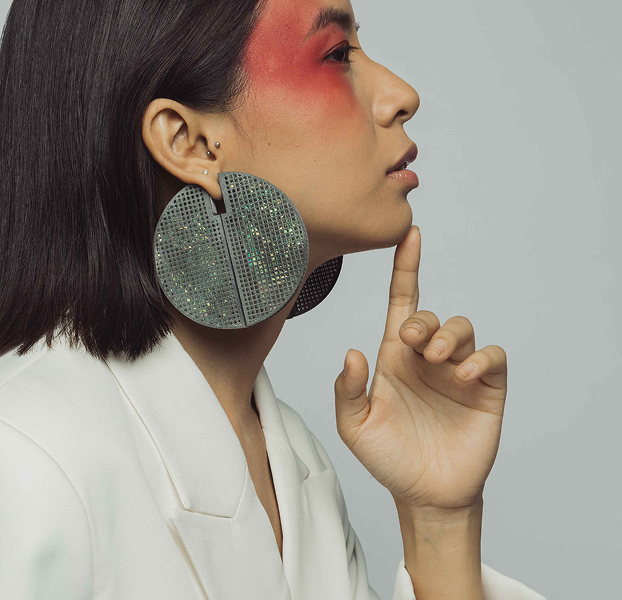
Foundree’s design language is minimal and understated, prioritizing a hands-on, organic conceptualization process (paper/clay mock-ups) before CAD work, and using material infusions (like mylar paper or pearls) to give the final 3D-printed piece warmth and depth.
Srishti maintains a design process that is intentionally non-digital at its inception. While 3D printing is the tool for production, the journey begins with traditional methods: sketching, or making mock-ups in paper or clay. The computer is used only at the very end to create the final file. This approach ensures the jewellery retains a “humanness,” preventing the final product from feeling like a detached, cold, engineered part.
She also elevates the material by mixing it with others. The ‘Glint’ collection, for example, combines 3D-printed components with mylar paper, changing the look of both materials. This fusion ensures that 3D printing is not the “hero” but an enhancement. “It is jewellery. Does not matter how it is made,” she asserts.
This dedication to authentic self-expression was forged through a difficult business valley where she was trying to design pieces she thought people would buy. This led to a lack of satisfaction. The defining moment of her career came when she committed to her truth: “I don’t think that I should make things that don’t make me happy.” She committed to designing pieces she would wear, trusting that her own sensibility would attract the right audience—a decision that has ultimately led to an authentic and fulfilling creative process.
Foundree’s sensibility is thus described as minimal, subtle, and subdued. The silhouettes are clean and basic, yet they contain a “bit of surprise.” They don’t shout for attention; they invite closer inspection. The true measure of the design’s success lies in the details—the shimmer of infused paper or the embedded pearls—which are not immediately obvious. This design philosophy is for the viewer who is willing to look closer, appreciating the quiet complexity that underpins the outward simplicity, and who values comfort above all else.
The Future: Jewellery as Self-Expression
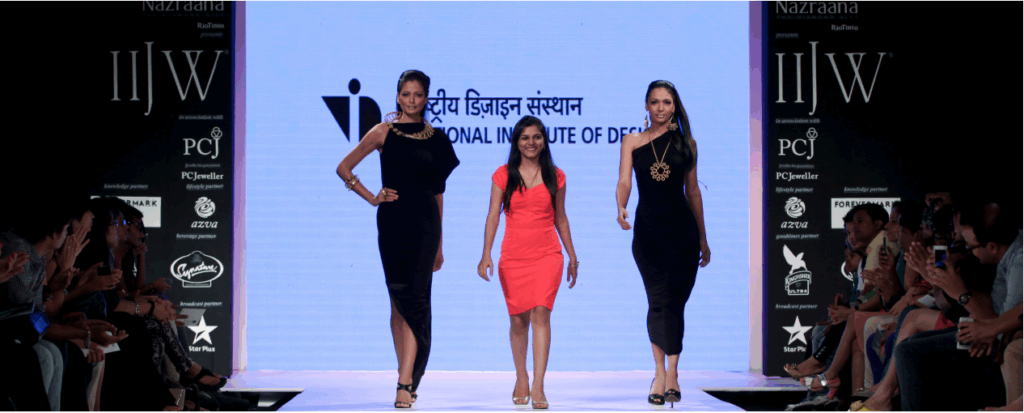
Srishti Gupta’s journey reflects a larger, ongoing shift in the perception of adornment. Where previous generations in India viewed jewellery primarily as an investment or ceremonial item, Srishti is clearly aligned with the emerging perspective.
The modern jewellery landscape is irrevocably changing from material value and investment to being a personal tool for self-expression, a shift driven by younger generations seeking meaningful, non-traditional adornment.
For current and upcoming generations (Gen Z and Gen Alpha), the meaning of jewellery is evolving. The future is about jewellery being a tool for self-expression. Srishti’s mother’s initial shock at her using 3D-printed nylon underscores this generational divide. However, Srishti’s success proves that the market is ready to embrace pieces that are precious not because they are gold, but because they carry an idea, a story, or a unique form that speaks to the wearer’s identity. This movement towards thoughtful, authentic, and technologically-informed adornment marks a profound and exciting change in the global jewellery landscape.
By fusing 3D printing with a hands-on, deeply personal approach, Srishti Gupta redefines contemporary jewellery. Foundree demonstrates that true value lies not in material extravagance, but in creating quiet, authentic adornment that perfectly embodies the wearer’s emotional truth.


